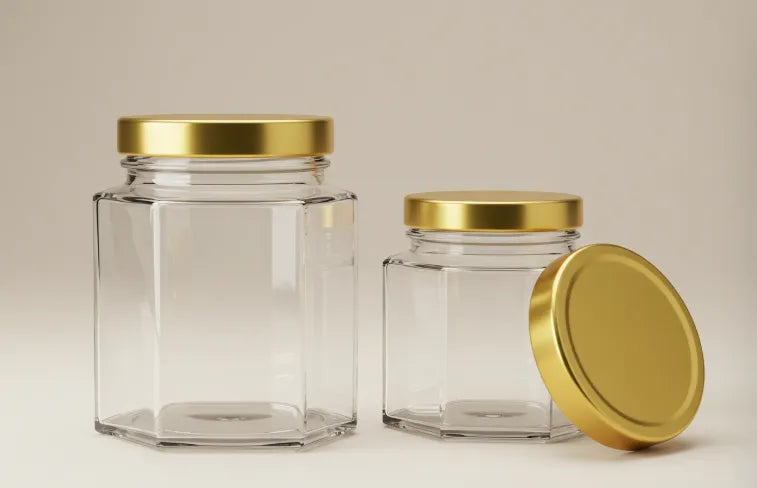
01 / 07Start with one customer and one sales channel
A honey range for a supermarket buyer needs a different brief from a premium gift product or a café portion pack. Write down who buys it, where they buy it and what they do with it. Then choose one initial product that fits that occasion. A focused launch gives you a clearer way to assess packaging, price and repeat demand.
02 / 07Choose the honey before the packaging
Ask for the available varieties and the product specification for each option. Compare samples against the qualities your customer will notice, such as flavour, colour and texture. Keep the selected sample reference in your project record, and ask how future supply will be matched to the agreed specification. If you want an infused product, treat the full ingredient list and formulation as a separate decision.
03 / 07Match the pack to the buying occasion
Glass, PET and sachets solve different practical problems. Consider shipping weight, handling, portion size, shelf presentation and how the pack will be opened. Before choosing a format, ask for dimensions, closure details, carton configuration and a filled sample. A packaging image is a useful starting point, but it is not a final production specification.
04 / 07Separate product evidence from marketing language
Create a simple evidence folder for the proposed SKU: ingredient specification, origin information, batch identification and the reports or certificates relevant to it. If an activity grade appears on the label, ask for the corresponding test report and method. Do not assume that a report for a sample, another batch or a different product applies to yours. Keep health claims out of your launch copy unless they have been separately substantiated and reviewed for the intended market.
05 / 07Price the complete route to the customer
Ask for a quote that separates honey, packaging, printing, packing and delivery. Add your own distribution, storage, channel and fulfilment costs before choosing a selling price. Compare like-for-like quantities and formats. A low filling price can become less attractive once carton size, freight or unused printed packaging is included.
06 / 07Approve the specification and artwork together
Build a single approval sheet that connects the recipe or honey specification, pack size, label version, barcode and carton format. Confirm who checks the label against the rules in the destination market before printing. Leave time for a physical or production proof where appropriate. Small differences between a mock-up and the supplied container can affect how the final label fits.
07 / 07Plan the second order before the first ships
A successful first shipment is only useful if you can replenish it. Ask what drives lead time: honey availability, packaging stock, printing, production or freight. Agree what happens when the preferred batch or container is unavailable. Start with a sensible forecast rather than a large range of untested SKUs, then use real sell-through and customer feedback to shape the next order.
Turn a product idea into a clear supplier brief.
Tell Honey X your market, honey preference, format and expected volume. Request samples and a project-specific private label quote.
Discuss private label honey Opens Honey X’s official enquiry page. An enquiry is not an order.Common buyer questions
Can I use my own honey branding?
Honey X advertises private label and branding support. Confirm artwork ownership, file requirements, label approvals and the exact scope of design work in your quote.
What is the minimum order for private label honey?
There is no single minimum stated here. It can depend on the honey, container, printed packaging and production requirements. Ask for the minimum for your exact proposed SKU.
Is a custom honey product ready to sell immediately?
Do not assume so. Product specification, artwork, market requirements, production scheduling and transport all need to be resolved for the individual project.
Sources and scope
Official references are starting points, checked on 8 November 2026, not clearance for a product or shipment. The buying checklist is general commercial guidance. Confirm current requirements with the responsible importer and relevant authority before committing to an order.